⏱️ Estimated reading time: 12 minutes
Search “best cybersecurity online training platform” and you’ll quickly run into a familiar problem. Every platform claims to be the best. Every listicle says something different. And somehow, none of them actually help you decide where to spend your time and money.
This guide is for beginners and career switchers eyeing their first certification, and for IT professionals trying to figure out where to prep for the next one. We’ll cut through the noise and break down the platforms that actually help people pass certifications in 2026, based on what each one does well and who it’s built for.
By the end, you’ll know which platform fits your certification goal, your learning style, and your budget. No fluff. No “it depends on you” non-answers.
What’s the Difference Between a Platform, a Course, and a Certification?
Before we go further, let’s clear up a bit of terminology that trips up a surprising number of people.
A platform is where you learn. Coursera, Udemy, and Cybrary are platforms. Think of them as the schools or libraries.
A course is an individual training program hosted inside a platform. For example, Jason Dion’s Security+ course on Udemy is a course, and Udemy is the platform it lives on. One platform can host dozens of different courses for the same certification.
A certification is a credential issued by an independent organization such as CompTIA, ISC2, or EC-Council. You earn it by passing an exam administered by that organization. No platform issues Security+, CISSP, or CEH. They only help you prepare.
This distinction matters because it means the platform you pick is a tool, not the goal. Your real objective is passing the exam issued by the certifying body.
Quick Comparison Table
| Platform | Best For | Certifications Covered | Pricing Model | Skill Level | Learning Style |
|---|---|---|---|---|---|
| Coursera | Structured certification pathways | Google Cybersecurity, Security+, CISSP prep | Subscription or per-course | Beginner to intermediate | Guided, university-style |
| Udemy | Affordable, exam-focused prep | Security+, CEH, CISSP, CySA+ | One-time purchase per course | Beginner to advanced | Self-paced video |
| Cybrary | Career-aligned certification tracks | Security+, CySA+, CISSP, PenTest+ | Subscription | Beginner to advanced | Role-based paths with labs |
| INE | Advanced technical and pentesting certs | eJPT, eCPPT, eWPT, CISSP | Subscription | Intermediate to advanced | Deep technical, hands-on labs |
| Pluralsight | Skill assessments plus cert prep | Security+, CISSP, cloud security certs | Subscription | Beginner to advanced | Structured paths with skill IQ |
Top Online Platforms for Cybersecurity Certification Prep
1. Coursera (Best for Structured Certification Pathways)

Coursera stands out because it partners with universities and major tech companies to build full certification pathways rather than standalone courses. That difference shows up in how the content is organized.
Platform/Course Pricing
Coursera Plus: $59/month or $399/year. (This grants access to over 7,000 courses and certs, though some university degrees and MasterTracks are excluded).
Certifications supported: Google Cybersecurity Professional Certificate, Security+ preparation, CISSP preparation, and a range of cloud security tracks from Google, IBM, and AWS.
Key features:
- University-backed and industry-backed content with recognizable names attached (Google, IBM, University of Maryland, and others).
- Guided learning paths that move you through concepts in a logical sequence instead of dropping you into a single 30-hour video.
- Graded assessments, portfolio projects, and peer reviews that simulate a classroom experience.
- A subscription model through Coursera Plus that unlocks most certificate programs.
Pros: Credible co-branded certificates, structured pacing, and meaningful hands-on exercises. The Google Cybersecurity Certificate in particular has become a popular entry point for career switchers who want structure before tackling Security+.
Cons: Less flexibility if you just want to drill exam questions. Some programs lean conceptual, so you may still need a separate practice exam resource. Coursera is also generally pricier than buying a single Udemy course.
Ideal learner profile: Career switchers, beginners, and anyone who learns best with a syllabus-style structure and a clear start-to-finish path.
2. Udemy (Best for Affordable, Exam-Focused Prep)

Udemy is the opposite of Coursera in almost every way, and that’s exactly why so many people use it. It’s a marketplace of individual instructors selling exam-focused courses, often aggressively priced.
Platform/Course Pricing
Udemy Personal Plan: Around $30 per month with a 20% discount for the first 3 months. This gives you unlimited access to a curated selection of 26,000+ top-rated courses without having to buy them individually.
Certifications supported: Security+, CEH, CISSP, CySA+, Network+, and essentially every major cybersecurity certification on the market.
Key features:
- Full-length practice exams bundled with many top-rated courses.
- Lifetime access after purchase, so you can revisit material when it’s time to recertify.
- Frequent sales that bring individual courses into the 10-to-20 dollar range.
- Well-known instructors such as Jason Dion and Mike Chapple who have built dedicated followings around specific exams.
Pros: Cheap, targeted, and time-efficient. If your only goal is to pass a specific exam on a specific date, a top-rated Udemy course plus a practice exam bundle often gets the job done.
Cons: Quality varies course-by-course since anyone can publish. You have to vet instructors carefully. Labs and hands-on environments are usually not included.
Ideal learner profile: Self-directed learners on a budget who want focused exam prep and already have some IT foundation. Great for Security+ and CEH candidates.
3. Cybrary (Best for Career-Aligned Certification Tracks)
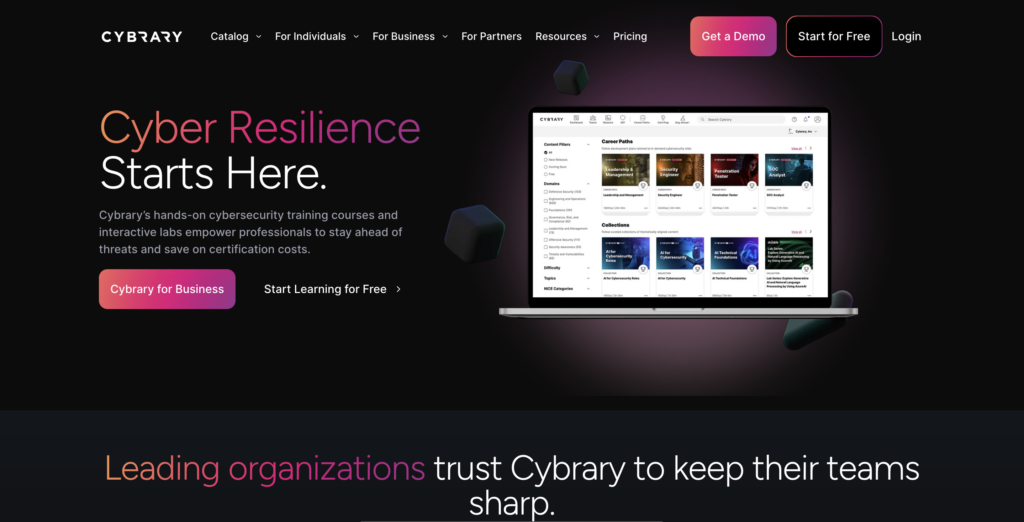
Cybrary built its reputation on role-based learning. Instead of asking “which cert do you want,” it starts with “which job do you want,” and then maps certifications and skills to that target.
Platform/Course Pricing
While Cybrary has a limited “Basic Access” free tier, you need their paid plan for virtual labs, assessments, and full certification paths.
- Cybrary Insider Pro (Monthly): $59 per month.
- Cybrary Insider Pro (Annual): $49 per month
Certifications supported: Security+, CySA+, PenTest+, CISSP, and several blue team and SOC analyst tracks.
Key features:
- Career paths that bundle courses, assessments, and virtual labs around roles like SOC analyst, penetration tester, or security engineer.
- Hands-on labs and practice environments directly inside the platform.
- Mentorship and community features for learners who want accountability.
Pros: Strong for people who want to connect certifications to an actual job outcome. The labs are a real asset, and the platform feels purpose-built for cybersecurity rather than being a general learning site with a security section.
Cons: The subscription cost is higher than Udemy, and some of the free tier has been scaled back over the years. Content depth on individual certs can vary.
Ideal learner profile: Career-focused learners who want their study path tied directly to a role, and who value labs and realistic practice environments.
4. INE (Best for Advanced Technical Certifications and Pentesting)
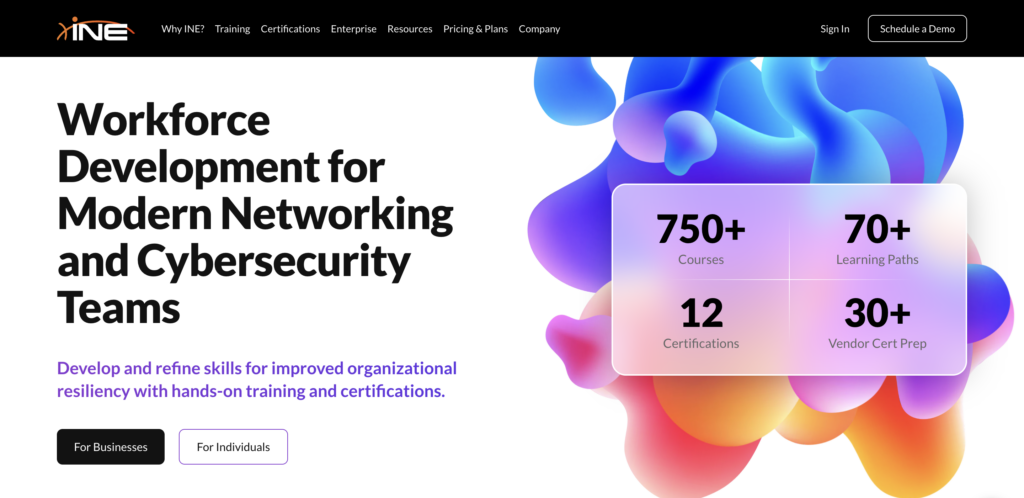
INE (and INE Security) sits in a different category from the others. It’s the go-to platform for people pursuing INE’s own technical certifications, especially in offensive security.
Platform/Course Pricing
Premium Subscription: $799 per year. (Required for the entire 70+ learning path content library, advanced labs, and eCPPT prep).
Exam Bundles: They currently offer bundles that give you an exam voucher plus 3 months of training access.
- Entry Level (+ 3 months Fundamentals): $299
- Professional Level: $599
Certifications supported: eJPT (Junior Penetration Tester), eCPPT (Certified Professional Penetration Tester), eWPT (Web Application Penetration Tester), along with CISSP and broader cybersecurity paths through INE’s training catalog.
Key features:
- Deep, technical training built around real labs rather than lectures.
- A strong offensive security focus, with pentesting-specific learning paths.
- Recent updates to the eJPT now include expanded web application testing, reconnaissance training, and a new course on generative AI for pentesters.
- Subscription tiers that bundle exam vouchers with training access.
Pros: Easily one of the best platforms for aspiring penetration testers. The eJPT is widely recognized as a hands-on, beginner-friendly entry into red teaming, and the eCPPT builds on it for more experienced practitioners.
Cons: Not the right fit if you’re just prepping for a vendor-neutral certification like Security+. You’re also tied to INE’s ecosystem for their proprietary certs.
Ideal learner profile: Aspiring penetration testers, red teamers, and technical practitioners who want lab-heavy training and an entry point into offensive security.
5. Pluralsight (Best for Skill Assessment Plus Certification Prep)

Pluralsight‘s distinguishing feature is its Skill IQ assessments, which measure your current proficiency in a given topic before you start studying. That means you’re not sitting through content you already know.
Platform/Course Pricing (yearly plans)
Expanded Libraries: $29/month or $299/year
Core Tech Plan: $45/month or $499/year
Certifications supported: Security+, CISSP, various cloud security certifications (AWS, Azure, GCP), and a growing list of security analyst and engineer paths.
Key features:
- Skill assessments that benchmark where you stand on specific topics.
- Structured certification prep paths with recommended sequences.
- Strong coverage of cloud security, which matters more every year as workloads keep shifting off-prem.
Pros: Good for professionals who already have some experience and want to target their weak spots instead of starting from zero. The cloud security content in particular is well-regarded.
Cons: Primarily a subscription model, so the economics only make sense if you’re going to use it regularly. Some learners find the cybersecurity catalog thinner than what Cybrary or INE offers.
Ideal learner profile: Working IT and security professionals brushing up for a specific certification, especially in cloud security.
Best Platforms by Certification Goal
You don’t need to read five reviews to figure out which platform fits your exam. Here’s the short version.
Best Platforms for Security+
Udemy and Coursera. For pure exam prep, a top-rated Udemy course plus a practice exam bundle is hard to beat on cost and efficiency. For broader foundational knowledge (especially if you’re brand new to IT), Coursera’s Google Cybersecurity Certificate followed by a Udemy Security+ course is a proven combination.
If you’re still weighing whether Security+ is the right first step, our CompTIA Security+ practical guide walks through the exam in more detail.
Best Platforms for CISSP
Cybrary and Pluralsight. CISSP is a management-level exam, and it rewards structured, in-depth study. Both platforms offer CISSP paths that track the eight domains in the official ISC2 exam outline and provide the kind of scaffolding that a Udemy one-shot course often lacks. Many CISSP candidates also supplement with a dedicated practice exam bank.
If you’re still weighing whether CISSP fits your current career stage, our CISSP practical guide breaks down what the credential signals and who it’s actually built for.
Best Platforms for CEH and Ethical Hacking
Udemy and INE. For CEH specifically, Udemy has several strong exam-focused courses. For actual ethical hacking skill, INE’s eJPT and eCPPT paths will teach you more practical offensive security than CEH’s curriculum alone. Many aspiring pentesters pair both: use CEH for the HR-friendly credential and INE for the real technical chops.
How to Choose the Right Cybersecurity Training Platform
The “best” platform only exists relative to three variables: your goal, your learning style, and your budget.
Start with the certification goal. An entry-level cert like Security+ doesn’t require the same platform as an advanced offensive security cert like eCPPT. Pick the exam first, then pick the platform.
Then factor in your learning style. Do you want a guided, syllabus-driven experience with deadlines and peer feedback? Coursera or Cybrary. Do you learn best by grinding through videos at your own pace and hitting practice exams? Udemy. Do you need labs and hands-on environments to make anything stick? Cybrary or INE.
Finally, think about budget. Subscriptions (Cybrary, Pluralsight, INE) pay off when you plan to use them for months and pursue multiple certifications. One-time purchases (Udemy) are better when you have a single exam in mind and a tight deadline. Coursera lives somewhere in between, with both subscription access and individual certificate purchases.
If your goal is one cert in the next 90 days, pick the cheapest high-quality option that covers the exam. If your goal is an 18-month career pivot across multiple certs, a subscription usually wins on cost per credential.
Free vs Paid Platforms for Certification Prep
Free resources absolutely have a place in a study plan. Professor Messer’s free Security+ videos, for example, have helped thousands of people pass the exam. YouTube channels, official certification guides, and community forums can carry you a long way.
Free platforms are usually enough when:
- The certification is vendor-neutral and widely taught (Security+ is the classic example).
- You’re a disciplined self-learner who can build your own study schedule.
- You already have some IT foundation and don’t need hand-holding.
Paid platforms tend to be worth the cost when:
- The certification is more advanced or technical (CISSP, CEH, eCPPT, eWPT).
- You need hands-on labs that are expensive to set up yourself.
- You need full-length practice exams that simulate the real testing experience.
- You want structured accountability and a clear finish line.
The biggest differences show up in depth of content, quality of labs, and the realism of practice exams. Free material often covers the “what.” Paid material is usually better at the “how” and the “in what order.”
Common Mistakes to Avoid
A few patterns show up again and again among people who burn out or fail their exams:
Choosing based on price alone. The cheapest course isn’t useful if it doesn’t get you to a pass. Look at reviews, pass rates where available, and whether practice exams are included.
Ignoring hands-on labs. This hits hardest with technical certifications. You cannot learn penetration testing or SOC analysis by watching videos. If the cert has a hands-on component, your platform needs one too.
Not aligning the platform with the certification objectives. Some platforms teach the topic; others teach the exam. For certification prep, you want content that’s mapped explicitly to the official exam objectives. Always cross-check.
Buying everything at once. You don’t need three Udemy courses, a Cybrary subscription, and a practice exam bundle to pass Security+. Pick one main resource, add a dedicated practice exam source, and start.
How to Start Your Certification Prep Today
If you’ve been stuck in research mode, here’s the simplest three-step path forward.
Step 1: Choose your certification. Security+ is the default choice for most beginners. CISSP is for experienced professionals moving toward leadership. CEH or eJPT is for aspiring pentesters. Lock in the target before anything else.
Step 2: Select a platform based on your learning style and budget. Use the comparison table above as a starting point. For most Security+ candidates, a solid Udemy course plus a practice exam bundle is the fastest path. For CISSP, lean toward Cybrary or Pluralsight. For pentesting, INE.
Step 3: Follow a structured learning path and drill practice exams. Block out study time on your calendar, work through the material in order, and plan at least two full-length practice exams before test day. Consistency beats intensity every time on these exams.
Conclusion
There’s no single best platform for cybersecurity certification prep in 2026, and anyone telling you there is hasn’t actually used them. The best platform is the one that matches the exam you’re chasing, the way you learn, and the budget you’ve got.
Coursera wins on structure. Udemy wins on price and exam focus. Cybrary wins on career-aligned paths and labs. INE wins on technical depth for offensive security. Pluralsight wins on assessments and cloud security.
Pick one. Start studying. Stay consistent. The platform matters much less than whether you actually show up to study on the days you said you would.
FAQ
What is the best platform for cybersecurity certification prep?
There is no single best platform. Coursera is best for structured pathways, Udemy for affordable exam-focused prep, Cybrary for career-aligned tracks with labs, INE for pentesting and advanced technical certs, and Pluralsight for skill assessments and cloud security. Pick based on your certification goal and learning style.
Can I pass Security+ using online platforms only?
Yes. Many thousands of people have passed Security+ using only online resources such as Professor Messer’s free videos, a Udemy course, and a practice exam bundle. The key is pairing structured study material with realistic practice exams and staying consistent over several weeks.
Which platform is best for CISSP preparation?
Cybrary and Pluralsight are the strongest choices for CISSP because both offer structured, domain-aligned learning paths that match the depth of the exam. Most candidates also add a dedicated practice exam bank and the official ISC2 study guide.
Are paid cybersecurity platforms worth it?
Usually yes, especially for advanced certifications with hands-on components such as CISSP, eCPPT, and eWPT. Paid platforms provide labs, structured paths, and full-length practice exams that are difficult to replicate with free resources. For entry-level certs like Security+, a mix of free content and one affordable paid course is often enough.