🕜 Estimated Reading Time: 10 minutes
The best cybersecurity newsletters and blogs save you hours every week. They filter the noise, surface what matters, and help you keep up with a field that changes daily. The problem is finding the right ones.
New vulnerabilities surface daily. Threat actors evolve their tactics weekly. The tooling landscape shifts every quarter. For anyone trying to keep up, whether you’re studying for your first certification or working as a seasoned defender, the volume of information can feel paralyzing.
Most learners (and even working pros) end up relying on scattered sources: a Twitter thread here, a Reddit post there, a vendor blog when something breaks. The result is information without context, headlines without depth, and a constant sense of falling behind.
The pros who actually stay current do something different. They curate. They build a small, trusted set of cybersecurity newsletters and blogs, then pair that reading habit with hands-on practice. Top professionals rely on curated infosec newsletters and trusted threat intelligence blogs to track threats, vulnerabilities, and trends efficiently, rather than chasing every breaking story.
This guide does the curation work for you. Whether you’re figuring out how to get into cybersecurity, upskilling for a role like SOC analyst or cyber threat intelligence analyst, or already working in the field, the cybersecurity news sources below will help you build a reading habit that compounds over time.
Quick Comparison Table
| Resource | Type | Best For | Frequency | Skill Level |
|---|---|---|---|---|
| Krebs on Security | Blog + Newsletter | Deep investigations | Weekly | Intermediate |
| Dark Reading | Blog + Newsletter | Industry analysis | Daily | Intermediate |
| The Hacker News | Newsletter + Blog | Breaking news | Daily | Beginner |
| SANS NewsBites | Newsletter | Curated insights | Weekly | Intermediate |
| TLDR Security | Newsletter | Curated tools + news | Weekly | Beginner |
| CyberWire | Newsletter | Daily briefings | Daily | Beginner |
| SecurityWeek | Blog + Newsletter | Enterprise insights | Daily | Intermediate |
| Infosecurity Magazine | Blog + Newsletter | Global coverage | Daily | Intermediate |
Top Cybersecurity Newsletters and Blogs
1. Krebs on Security

Official site: krebsonsecurity.com
- Type: Blog with email subscription
- Best for: Investigative cybersecurity journalism
- Frequency: Weekly (sometimes more during major incidents)
- Skill level: Intermediate
Run by veteran investigative journalist Brian Krebs, Krebs on Security is widely regarded as the gold standard for long-form cybercrime reporting. Krebs spent years covering security at The Washington Post before going independent. That journalism background shows in every post. Where most security news outlets summarize a press release in a few hundred words, Krebs follows the money, names the actors, and traces the operations behind the headlines.
Why it stands out
The blog is known for breaking major stories before anyone else. Krebs was the first to report on the Target breach in 2013, the Ashley Madison hack, and a long list of cybercriminal takedowns. His investigations often pull threads from underground forums, public records, and leaked databases. They expose the people running ransomware gangs, carding marketplaces, and SIM-swapping operations. If you want to understand how cybercrime actually works as a business, this is the source.
Who should read it
Krebs on Security is best for intermediate readers who already understand the basics and want depth instead of headlines. The posts assume you know what a botnet is and why credential stuffing matters. For learners working toward roles like cyber threat intelligence analyst, it’s essentially required reading. The investigations model the kind of pattern recognition, source verification, and adversary profiling that CTI work demands every day.
How to read it well
Krebs publishes a few times a week, and posts tend to be long. Save the deep-dive pieces for a focused weekly reading session. Pair them with structured study, such as our CompTIA Security+ practice tests organized by domain. The real-world stories will reinforce the concepts you’re learning on the exam side.
2. Dark Reading

Official site: darkreading.com
- Type: News site with multiple email newsletters
- Best for: Enterprise security analysis and trends
- Frequency: Daily
- Skill level: Intermediate
Dark Reading has been one of the most established names in security journalism for nearly two decades. Owned by Informa Tech, it produces a steady stream of news, analysis, and commentary for working security practitioners and decision-makers. The site organizes coverage into specialty areas like vulnerabilities and threats, cloud security, ICS/OT, application security, and risk management. That structure lets you drill into the topics that matter most for your role.
Why it stands out
Some sites chase clicks with breathless breach coverage. Dark Reading consistently pairs news with practical analysis. You’ll often find a vulnerability story alongside a related piece on detection strategies, mitigation techniques, or how the issue fits into a broader trend. The contributor pool includes practitioners, vendors, and journalists. That mix of perspectives is something pure newsrooms can’t match.
Who should read it
Dark Reading is best for intermediate readers who are working in security operations or actively building toward a role. The writing assumes familiarity with concepts like SIEM, EDR, zero trust, and the broader vendor landscape. If you’re exploring different cybersecurity certification paths, it’s a useful complement. The articles show how the certifications you’re studying for map to real strategic conversations inside enterprises.
How to read it well
The volume of daily content can be overwhelming. Subscribe to one or two themed newsletters instead of trying to consume everything on the homepage. The weekly editor’s picks email is a good starting point if you want curated highlights without the firehose.
3. The Hacker News
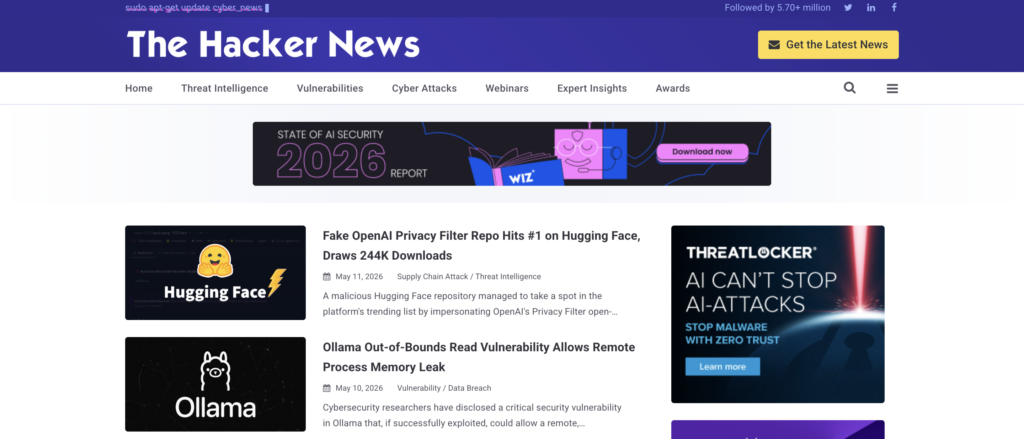
Official site: thehackernews.com
- Type: Blog with daily email digest
- Best for: Real-time updates on vulnerabilities and attacks
- Frequency: Daily, often multiple posts per day
- Skill level: Beginner-friendly
The Hacker News (THN) is one of the most-read cybersecurity blogs on the internet, and for good reason. Articles are short, fast, and focused on what just happened. A new CVE. A fresh ransomware campaign. A patch you need to apply. A breach disclosure. Coverage is broad enough that you can use THN as your single daily pulse-check on the industry.
Why it stands out
The pace and accessibility are the main draw. Most articles take two or three minutes to read. The writing avoids unnecessary jargon. That makes THN one of the easier on-ramps for people still building their cybersecurity vocabulary. The site also covers topics across the stack, including web application flaws, OS vulnerabilities, cloud misconfigurations, and supply chain attacks. Beginners get exposure to the breadth of the field early.
Who should read it
This one is genuinely beginner-friendly. If you’re early in your journey and following our guidance on how to start a cybersecurity career, The Hacker News is one of the first cybersecurity news sources you should bookmark. Read it daily for a few months. You’ll build an intuition for what kinds of stories matter, what attacks are common, and which vendors and tools come up repeatedly.
How to read it well
Use it for breadth, not depth. When a story catches your attention, follow up with a deeper source like Krebs on Security or the original advisory. THN is a great surface scanner. It’s not where you go for the full picture.
4. SANS NewsBites

Official site: sans.org/newsletters
- Type: Curated newsletter
- Best for: Expert commentary on the week’s most important stories
- Frequency: Twice weekly
- Skill level: Intermediate
SANS Institute is one of the most respected names in cybersecurity training. SANS NewsBites is essentially their editorial team’s answer to information overload. Each issue collects the most significant security stories of the past few days. It summarizes them in a few sentences and adds short commentary from SANS instructors and senior practitioners.
Why it stands out
The expert annotations are the real value. A breach story might appear in a dozen outlets. Only NewsBites gives you a one-paragraph take from someone who has spent decades building incident response programs. They explain why the breach matters and what defenders should learn from it. That context is the bridge between news and practice. It’s exactly what most learners are missing.
Who should read it
SANS NewsBites pairs especially well with structured exam prep. If you’re working through a study plan for Security+, CISSP, or any other cert covered in our cybersecurity certification guide, the expert commentary helps you connect textbook concepts to current events. It’s also a strong fit for managers and team leads who need to talk credibly about industry developments.
How to read it well
Skim the headlines. Read the commentary on stories that touch your role. Save the longer analyses for when you have a quiet 15 minutes. NewsBites does the curation. Your only job is to read with intent.
5. TLDR Security

Official site: tldrsec.com
- Type: Curated newsletter
- Best for: Tools, research papers, and high-signal news
- Frequency: Weekly
- Skill level: Beginner to intermediate
TLDR Security, written by Clint Gibler, has become one of the most respected weekly infosec newsletters in the application and cloud security space. Each issue is a tightly edited round-up: a few news items; a few interesting tools; a few research papers or conference talks. Then a short commentary on each. It’s the newsletter version of having a well-read friend forward you the good stuff every Monday morning.
Why it stands out
The signal-to-noise ratio is exceptional. Gibler has a strong filter for what actually matters, especially in AppSec, DevSecOps, cloud security, and AI security. The tool recommendations alone are worth the subscription. You’ll routinely discover open-source projects, blog posts, and talks that you would have missed in the noise of social media.
Who should read it
TLDR Security is a great fit for learners who want a single weekly digest that consistently introduces them to new tools and ideas. It’s also valuable for working practitioners in development, cloud, or security engineering roles. If your interests lean toward the offensive side and you’re exploring CEH practice tests by domain or other ethical hacking paths, you’ll find plenty of relevant tools and writeups in each issue.
How to read it well
Treat it as your weekly “what’s new” briefing. Block 20 minutes on a quiet morning. Skim the whole issue. Bookmark anything you want to come back to. The archive is also worth browsing if a specific topic is on your mind.
6. CyberWire Daily Briefing

Official site: thecyberwire.com
- Type: Newsletter and podcast
- Best for: Daily industry briefings
- Frequency: Daily
- Skill level: Beginner-friendly
CyberWire produces a daily news briefing in both written and podcast formats. The tone is more business-news than tech-blog. You get a clear summary of the day’s most important developments across cybercrime, nation-state activity, policy, and industry moves. The format is designed for busy readers and listeners.
Why it stands out
CyberWire understands that cybersecurity is no longer just a technical field. It’s a business issue, a policy issue, and increasingly a geopolitical one. The daily briefing reflects that. Alongside the latest CVEs and breach reports, you get coverage of regulatory developments, M&A activity, and global incidents that affect the threat landscape. That broader framing is genuinely useful, especially as you grow into senior or leadership-track roles.
Who should read it
CyberWire is one of the friendliest entry points for beginners because of its summary-first format. It’s also great for anyone with a long commute or a daily walk. The podcast version is well-produced and easy to listen to at speed. If you’re working through our broader thinking on why cybersecurity is a future-proof career, CyberWire reinforces the point every day. It shows just how much is happening in the industry.
How to read it well
Pick one format and stick with it. If you’re a reader, subscribe to the daily email. If you prefer audio, add the podcast to your regular rotation. Mixing both can make the same content feel repetitive.
7. SecurityWeek

Official site: securityweek.com
- Type: News site and email newsletter
- Best for: Enterprise and technical security news
- Frequency: Daily
- Skill level: Intermediate
SecurityWeek is a long-running, dedicated cybersecurity news site. It focuses on enterprise-relevant coverage: malware analysis, vulnerability disclosures, ICS and OT security, threat intelligence, and industry moves. It’s one of the most reliable sources for thorough write-ups when a major vulnerability or breach lands.
Why it stands out
Some outlets stop at the headline. SecurityWeek tends to publish substantial follow-ups: vendor response, patch availability, exploitation details, and analysis of what the incident means for similar organizations. The site also runs respected industry conferences. Its coverage often benefits from direct conversations with the practitioners and researchers driving the field.
Who should read it
SecurityWeek is a strong fit for working professionals and serious upskillers. That’s especially true for anyone in or moving toward roles like SOC analyst, incident responder, vulnerability manager, or security engineer. The reporting on incident response and recovery also pairs well with operational topics like those covered in our guide to disaster recovery strategies including cold, warm, and hot sites.
How to read it well
Subscribe to the daily or weekly newsletter instead of checking the site repeatedly. Use the topic tags to follow specific areas (such as ICS/OT or cloud security) if you have a focused interest.
8. Infosecurity Magazine

Official site: infosecurity-magazine.com
- Type: Online magazine, newsletter, and print
- Best for: Global, well-rounded cybersecurity coverage
- Frequency: Daily
- Skill level: Intermediate
Infosecurity Magazine, based in the UK, takes a broader and more international view than many US-centric outlets. It covers technical news, but it gives equal weight to compliance, regulation, privacy, and the human side of security. The result is a publication that helps you understand how cybersecurity is unfolding as a global discipline rather than just a technology stack.
Why it stands out
The balanced editorial mix is the core strength. In a single week, you might read a deep dive on a new ransomware variant, a feature on the EU’s evolving cyber regulations, a profile of a CISO’s strategic priorities, and an opinion piece on workforce diversity in security. That breadth is especially helpful for learners who are still figuring out which corner of the field fits them best.
Who should read it
Infosecurity Magazine is well-suited to readers who want a more rounded perspective. It’s a particularly good fit for those interested in governance, risk, and compliance roles in addition to technical work. It also offers a useful complement to more US-focused sources for anyone working in or with international organizations.
How to read it well
Use the email newsletter as your primary entry point. Follow the topic categories that match your career direction. The magazine also publishes regular webinars and white papers that are worth a look when you want longer-form material.
“Best For” Categorization
Different cybersecurity newsletters and blogs serve different stages of your journey. Use this quick guide to pick what fits where you are right now.
Best for beginners
- The Hacker News: short, daily, accessible
- CyberWire Daily Briefing: clear summaries in text or audio
- TLDR Security: one curated weekly digest
If you’re still in the early stages and following our walkthrough on how to get into cybersecurity, start with one daily and one weekly source from this list. These are also great cybersecurity resources for beginners who want quick wins without information overload.
Best for deep learning
- Krebs on Security: investigative depth and adversary analysis
- SANS NewsBites: expert commentary on the week’s most important stories
These two together cover both the “what happened” and the “what it means” sides of the field. They’re particularly valuable for anyone targeting a cyber threat intelligence analyst role or any position where pattern recognition matters more than headline counting.
Best for industry insights
- Dark Reading: strategy, tooling, and enterprise trends
- SecurityWeek: substantive enterprise and technical coverage
- Infosecurity Magazine: global, multi-disciplinary perspective
These cybersecurity industry updates help you talk credibly about the field in interviews, performance reviews, and team meetings.
How to Choose the Right Cybersecurity Newsletter
Here are the most common questions we get from readers, with short, practical answers.
Which cybersecurity newsletter should beginners follow?
Start with The Hacker News for daily breadth and CyberWire for clear daily summaries. If you can only pick one, choose The Hacker News. The short article format makes it easy to build a daily reading habit without burning out.
What is the best cybersecurity blog for deep insights?
Krebs on Security, hands down. No other publication consistently digs into the people, infrastructure, and operations behind cybercrime the way Krebs does. Pair it with SANS NewsBites for expert commentary on the rest of the week’s news.
How many cybersecurity newsletters and blogs should you actually follow?
Two or three at most. Almost every learner makes the same mistake. They subscribe to ten newsletters, fall behind, feel guilty, and eventually unsubscribe from all of them. One daily source plus one weekly digest is plenty for most people.
Should you read newsletters before or instead of certification study?
In addition to, never instead of. Newsletters give you context and current events. Certifications give you the structured, foundational knowledge that lets the news make sense. If you haven’t picked a starting cert yet, our cybersecurity certification guide lays out the options from beginner to advanced.
Do these cybersecurity newsletters cost anything?
All eight of the resources in this guide offer free email subscriptions. Some, like SecurityWeek and Infosecurity Magazine, also publish premium reports or run paid events. The core newsletter content is free.
Pro Tips to Stay Consistent
Subscribing is the easy part. Reading consistently is where most people fall off. Here are a few habits that work.
Pick one daily and one weekly newsletter. Resist the urge to subscribe to everything. A single daily source (such as The Hacker News or CyberWire) and a single weekly digest (such as TLDR Security or SANS NewsBites) is enough to stay current without drowning.
Block a dedicated reading time. Ten to fifteen minutes is plenty. Many practitioners do this with their morning coffee or right before they start the workday. The specific time matters less than the consistency.
Save the long pieces for later. When a Krebs on Security or SecurityWeek article looks substantial, don’t try to read it in two minutes. Bookmark it. Save it to a read-later app. Come back when you have focus. Skimming a deep investigation is worse than not reading it at all.
Pair reading with hands-on practice. Reading about an attack technique is useful. Trying to detect or replicate it in a lab is what makes the knowledge stick. Combine your newsletter habit with:
- Practice tests, such as our CompTIA Security+ practice tests by domain and free EC-Council CEH practice tests by domain
- Hands-on labs on platforms like TryHackMe and Hack The Box
- Structured courses and online platforms tied to a certification path
- Communities, whether that’s a local meetup, a Discord server, or a professional association
Review what you’ve learned weekly. Once a week, take five minutes to ask: what is one thing I read this week that I want to remember? Write it down (even in a notes app). That turns passive scrolling into active learning.
Conclusion
The cybersecurity field rewards consistency far more than volume. The professionals who stay sharp aren’t the ones reading every newsletter. They’re the ones reading two or three trusted sources every week, year after year, while they keep building real skills alongside.
Your goal isn’t to consume more information. It’s to build a small, reliable “information diet” that fits naturally into your day. Pick two or three cybersecurity newsletters and blogs from this list. Subscribe today. Commit to ten minutes a day for the next month. By the end of that month, you’ll be more current on the industry than most of your peers, and the habit will run itself.
Start with two or three from this list and build your daily reading habit. Pair it with structured study and hands-on practice. You’ll be well on your way to a long, future-proof career in security.